Session Timer Slot: Why Set One?
If you are not running a hard session timer on every slot machine you touch, you are bleeding money and calling it entertainment. The mechanism is brutally simple: a countdown clock that forces a stop-loss on time, not just on cash. Most players obsess over bankroll limits while completely ignoring the clock, and that is exactly how the house grinds them down. A session timer slot is not a gimmick — it is the single cheapest defense mechanism you can deploy against your own worst instincts. 😤
The psychology here is not subtle. Slot play is engineered to dissolve temporal awareness. Spinning reels, near-miss sounds, and bonus triggers all hijack your dopamine loop and flatten your sense of elapsed time. You sit down at 9 PM and surface at 3 AM with an empty account and no memory of the transition. A session timer shatters that trance by reintroducing a hard boundary the machine's designers never wanted you to have.

The Cold Math Behind Time Caps
Here is the part the glossy marketing never tells you. Slot machine volatility is a function of spin count, not wall-clock time, but your decision quality degrades with fatigue. Studies across gambling behavior consistently show that error rates climb sharply after 90 minutes of continuous play. You start chasing losses, doubling bet sizes, and ignoring the paytable you studied on arrival. A session timer slot setup caps your exposure at the exact point where your judgment begins to rot.
Run the numbers yourself: a player spinning at 600 RPM on a mid-volatility machine burns through roughly 36,000 spins in an hour. At a 96% RTP, the theoretical drain is already baked in. Add fatigue-driven bet escalation and that drain multiplies. The timer does not change the RTP — nothing changes the RTP — but it stops you from donating an extra two hours of escalated stakes to the house edge. 😤
Configuring the Timer Without Fooling Yourself
Most operators bury session limits in account settings because they do not want you to find them. Find them anyway. Set a hard stop at 45 minutes for high-volatility sessions and 60 to 75 minutes for low-volatility grinding. The timer must trigger a full stop, not a gentle reminder you can dismiss. If your platform lacks a native timer, use a phone alarm and honor it like a circuit breaker tripping.
The fatal mistake is setting a timer and then negotiating with it. "Just one more bonus round" is the exact mental trap the timer exists to kill. Treat the alarm as non-negotiable hardware, not a suggestion. The players who survive long-term in this industry are not luckier — they are the ones who built mechanical guardrails around their own biology. 🎯
Why the Slot Floor Fears the Clock
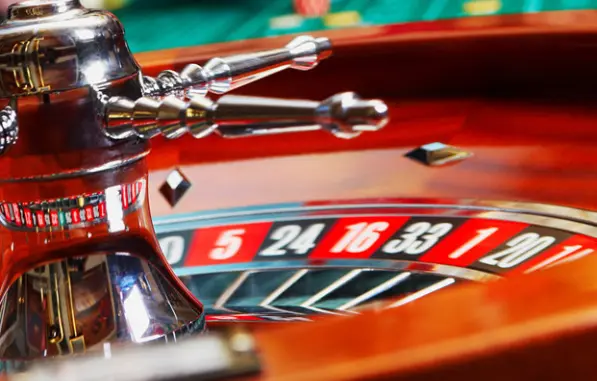
Casino floor design is optimized for one thing: keeping your body in the seat. Free drinks, ambient lighting, no windows, no clocks on the wall — every environmental cue is engineered to erase time. A session timer slot protocol is a direct countermeasure to that entire architecture. You are essentially installing a window and a clock inside your own head.
Operators know that extended sessions correlate with higher lifetime losses per patron. The math is not mysterious. Longer play equals more spins, and more spins equals more exposure to the house edge. Your timer is the one variable in that equation you actually control. Every serious player treats it as sacred — because the alternative is trusting a dopamine-flooded brain to self-regulate inside a machine built to prevent exactly that.
Set it. Obey it. Reset only after a genuine break of at least 30 minutes away from any screen. Anything less and the fatigue curve never actually resets, and your stop-loss becomes theater.