Top Mechanical Ball Bingo Draws | Audited Live Casino Tech Guide
The convergence of physical randomization hardware and real-time streaming protocols has redefined authenticity in digital gaming. 🎰 Operators and platform architects now prioritize Top Mechanical Ball Bingo Draws as a benchmark for provable fairness, where every ball trajectory, air-mix cycle, and optical recognition event is captured and cryptographically hashed. This guide dissects the engineering stack behind audited live casino environments, focusing on the mechanical draw apparatus that eliminates algorithmic bias and satisfies rigorous regulatory scrutiny.
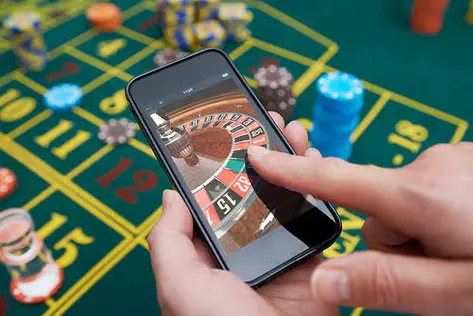
Pneumatic Chamber Dynamics and Ball Randomization Physics
The core of any certified mechanical ball bingo system is the pneumatic chamber, a sealed vortex engineered to generate chaotic ball movement through calibrated air jets. Unlike RNG-based virtual draws, the Top Mechanical Ball Bingo Draws rely on turbulent airflow dynamics, where each ball's mass, surface friction coefficient, and rebound elasticity introduce non-deterministic variables. Certifying laboratories such as those adhering to ISO 17025 standards conduct high-speed camera audits at 1,000 frames per second to verify that no ball exhibits preferential exit behavior across 10,000+ trial cycles. 🎱 The chamber's internal geometry, often a toroidal or spherical design, prevents laminar flow patterns that could theoretically create predictable ball clustering.
Optical Recognition Arrays and Real-Time Data Integrity
Once a ball enters the extraction chute, an array of infrared and visible-light sensors captures its identity within milliseconds. This optical recognition layer is critical for latency-sensitive live dealer environments, where the time delta between physical extraction and digital display must remain under 200ms to preserve player immersion. Each recognized ball triggers an immutable event log, appended to a distributed ledger or hash chain, ensuring that the draw sequence cannot be retroactively altered. The Top Mechanical Ball Bingo Draws integrate redundant sensor paths, so a single optical failure does not compromise the integrity of the outcome. Redundancy extends to power systems, with UPS backups maintaining chamber operation during grid fluctuations.

Audit Trails, Certifications, and Operator Compliance
Regulatory bodies across Malta, Gibraltar, and Curaçao mandate periodic recertification of mechanical draw devices, typically at 6- or 12-month intervals. The audit process includes ball weight verification, chamber pressure calibration, and statistical analysis of exit distributions using chi-squared tests. Operators deploying these systems must maintain detailed maintenance logs, including ball replacement schedules—typically every 3,000 draws—to prevent surface wear from introducing subtle biases. 🛡️ Independent auditors also review the streaming pipeline for tamper-evident watermarking, ensuring that the video feed corresponds exactly to the physical draw event. Non-compliance can result in license suspension, making adherence to these protocols non-negotiable for live casino stakeholders.
Latency Optimization and Multi-Jurisdiction Streaming Architecture
Delivering a mechanical draw to a global player base requires edge computing nodes positioned within 50ms of major population centers. The video encoding pipeline utilizes H.265 compression with adaptive bitrate streaming, dynamically adjusting to player bandwidth while preserving the visual fidelity needed to observe ball markings. Time synchronization across the physical chamber, encoding server, and player device relies on NTP pools with sub-10ms accuracy. For operators targeting multiple jurisdictions, geo-fenced content delivery networks ensure that players in restricted regions are automatically excluded, maintaining compliance without degrading performance for eligible users. 🎥
Failure Mode Analysis and Redundant Draw Protocols
Even the most robust mechanical system requires contingency planning. Certified live casino platforms implement a dual-chamber failover architecture: if the primary pneumatic chamber detects anomalous pressure or sensor disagreement, the secondary chamber activates within 15 seconds. Players are notified of the switch via on-screen messaging, and the draw sequence continues without voiding prior outcomes. Statistical continuity is preserved by pre-seeding both chambers with identically weighted ball sets from the same manufacturing batch. This level of operational resilience distinguishes tier-one live dealer studios from unregulated operators, reinforcing player trust and extending session durations.
Player Verification and Transparent Draw History Access
Modern platforms provide players with a verifiable draw history interface, where each past outcome links to a cryptographic hash and, in some implementations, a compressed video clip of the extraction moment. This transparency mechanism allows players to independently confirm that the displayed result matches the physical event, a feature increasingly demanded by high-stakes participants. The user interface typically includes a filterable log covering the last 500 draws, with export functionality for third-party verification. 🔍 By exposing this data, operators demonstrate a commitment to provable fairness that extends beyond regulatory minimums, fostering long-term player retention in a competitive live casino landscape.